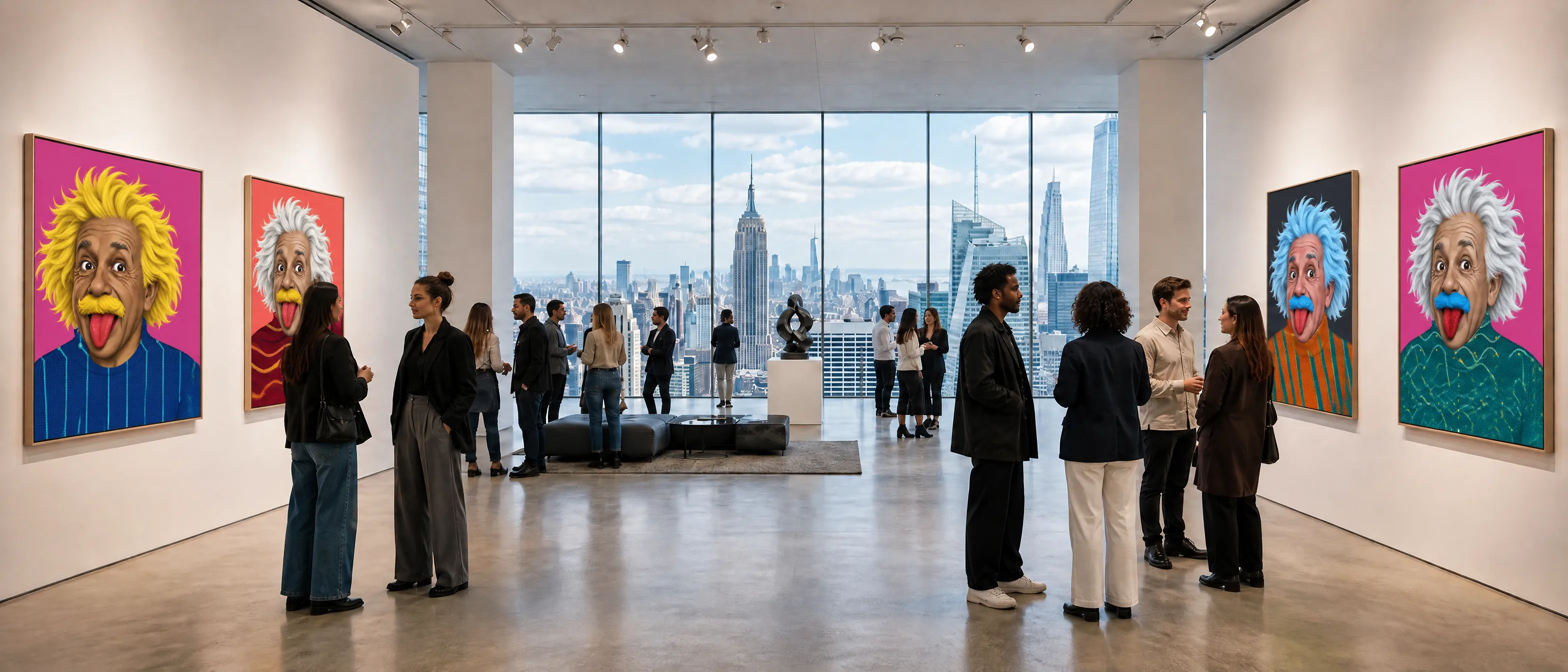
The photograph
14 March 1951
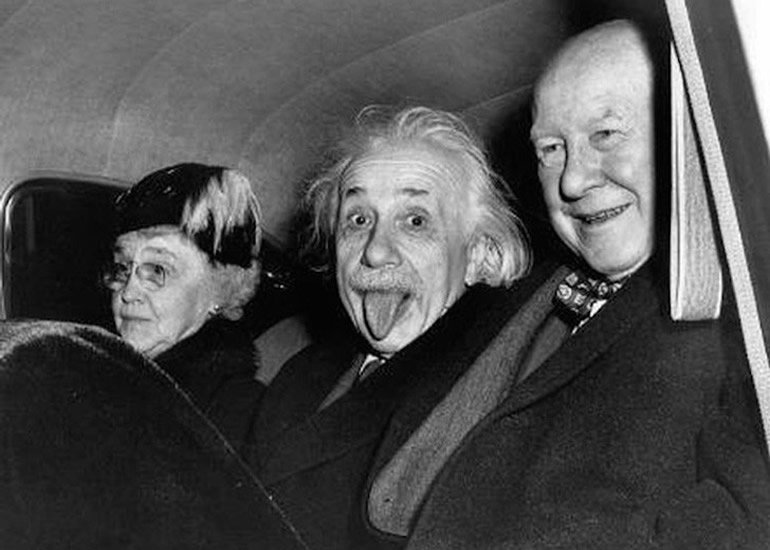
It was his seventy-second birthday. His colleagues at the Institute for Advanced Study, in Princeton, had thrown him a party, and the photographers had been at him all day. Smile. Look here. Smile again.
By the end of the evening Einstein had had enough of it. As he was leaving, seated in a car between his hosts, the United Press photographer Arthur Sasse asked for one more smile. Einstein stuck out his tongue instead.
It was not a joke for the camera. It was a protest against the camera.
The editors at United Press hesitated before running a picture of the world's most respected physicist pulling a face. They ran it. Einstein, far from being embarrassed, was delighted: he ordered nine prints for himself and sent them to close friends.
He also edited it. In the original frame he is not alone — beside him sit Dr. Frank Aydelotte, then head of the Institute for Advanced Study, and his wife. Einstein cropped the two of them out, kept the face and the tongue, and used the result as a personal card.
The photograph went on to become as widely known as the equation that made him famous, and for the opposite reason: not because it is difficult, but because anyone understands it instantly. A print he signed sold at auction in 2017 for 125,000 dollars.
He never quite understood his own fame. He had written books almost nobody could read, and had become the most recognizable face on earth. The picture that carried him there is one in which he is not explaining anything at all.
That is where Pop Genius starts: at the exact moment the greatest mind of the century decided to behave like a child.